
What is core body temperature? An easy-to-understand guide to its relationship with heatstroke and how to "prevent it from rising and lower it."
Have you heard the term “core body temperature” in news about heatstroke? In fact, what determines the severity of heatstroke is not the skin temperature measured by a thermometer, but this core body temperature. And core body temperature has a troublesome property: once it rises, it does not come down easily. This article explains the basics of core body temperature and practical measures to prevent heatstroke.
What is core body temperature?
Core body temperature is the temperature inside the body (the core), such as the brain and internal organs. It is distinguished from the temperature of the skin surface (skin temperature), which is easily affected by the outside air, and is normally kept at around 37°C.
When the body's temperature regulation is working normally, core body temperature stays almost constant. But when heat keeps building up in the body from midsummer sun or intense exercise, sweating and heat release from the skin can no longer keep up, and core body temperature begins to rise. This is the start of heatstroke.
Core body temperature and the severity of heatstroke
The severity of heatstroke is closely related to how high core body temperature has risen. A rough guide is as follows.
- Mild (core body temperature 37.5°C to under 38°C): fatigue, dizziness, headache, nausea, etc.
- Moderate (38°C to under 40°C): vomiting, severe headache, weakness, lightheadedness, etc.
- Severe (40°C or higher): impaired consciousness, convulsions, difficulty breathing, etc. Also called “heat stroke,” this is life-threatening and requires immediate cooling and an emergency call
Above 40°C, organs are said to begin to be damaged. If you see signs such as confusion, abnormal responses when spoken to, or being unable to drink water on one's own, call an ambulance without hesitation.
*For details on symptoms and first aid, please also check the Ministry of the Environment's heatstroke prevention information website.
The troublesome property of core body temperature: it does not drop quickly
The skin surface can be cooled quickly with ice or cooling goods, but heat trapped inside the body does not escape so easily.
A cold towel on the neck feels good, but what drops is mainly skin temperature. To lower core body temperature, cooled blood has to circulate through the body and carry the heat out, which takes time. The reason severe heatstroke calls for “cooling as quickly as possible” is that this time lag can be fatal.
The conclusion from this property is simple. It is far easier to keep core body temperature from rising than to bring it down. The essence of heatstroke prevention lies less in first-aid knowledge than in prevention that keeps core body temperature from rising.
Prevention: keeping core body temperature from rising
Prevention comes down to three ideas: reduce the heat coming into the body, increase the heat leaving the body, and avoid producing too much heat.
1. Reduce the heat coming into the body In direct sunlight, heat from sunlight (radiant heat) enters the body. Use shade and a hat, and wear clothing that covers your skin to reduce the amount of sunlight you receive. Sunlight contains a lot of near-infrared light, which we readily feel as heat. Note that standard UV-protection products do not target near-infrared rays (for details, see “What is near-infrared light?”).
2. Increase the heat leaving the body Sweat evaporation is the body's largest cooling system. The basics are to keep up the materials for sweat with regular water and salt intake, and not to hinder evaporation, by wearing breathable, quick-drying clothing. On humid days sweat evaporates less and heat release becomes less efficient, so be careful even if the temperature is not very high.
3. Avoid producing too much heat The more the body moves, the more heat it produces inside. On days with a high heat index (WBGT), lowering the intensity of exercise or work, taking frequent breaks, and not overdoing it right after the rainy season, when the body is not yet used to the heat, are also part of managing core body temperature.
How to lower core body temperature in an emergency
If heatstroke is already suspected, immediately move to a cool place, loosen clothing, cool the large blood vessels, and replenish water and salt.
Even on the body surface, large blood vessels run through the neck, armpits and groin, and cooling these areas helps cooled blood circulate and lower core body temperature. If the person is not fully conscious or cannot drink water on their own, keep cooling them and call an ambulance immediately.
CORE SHIELD®, which blocks 87%+ of near-infrared rays
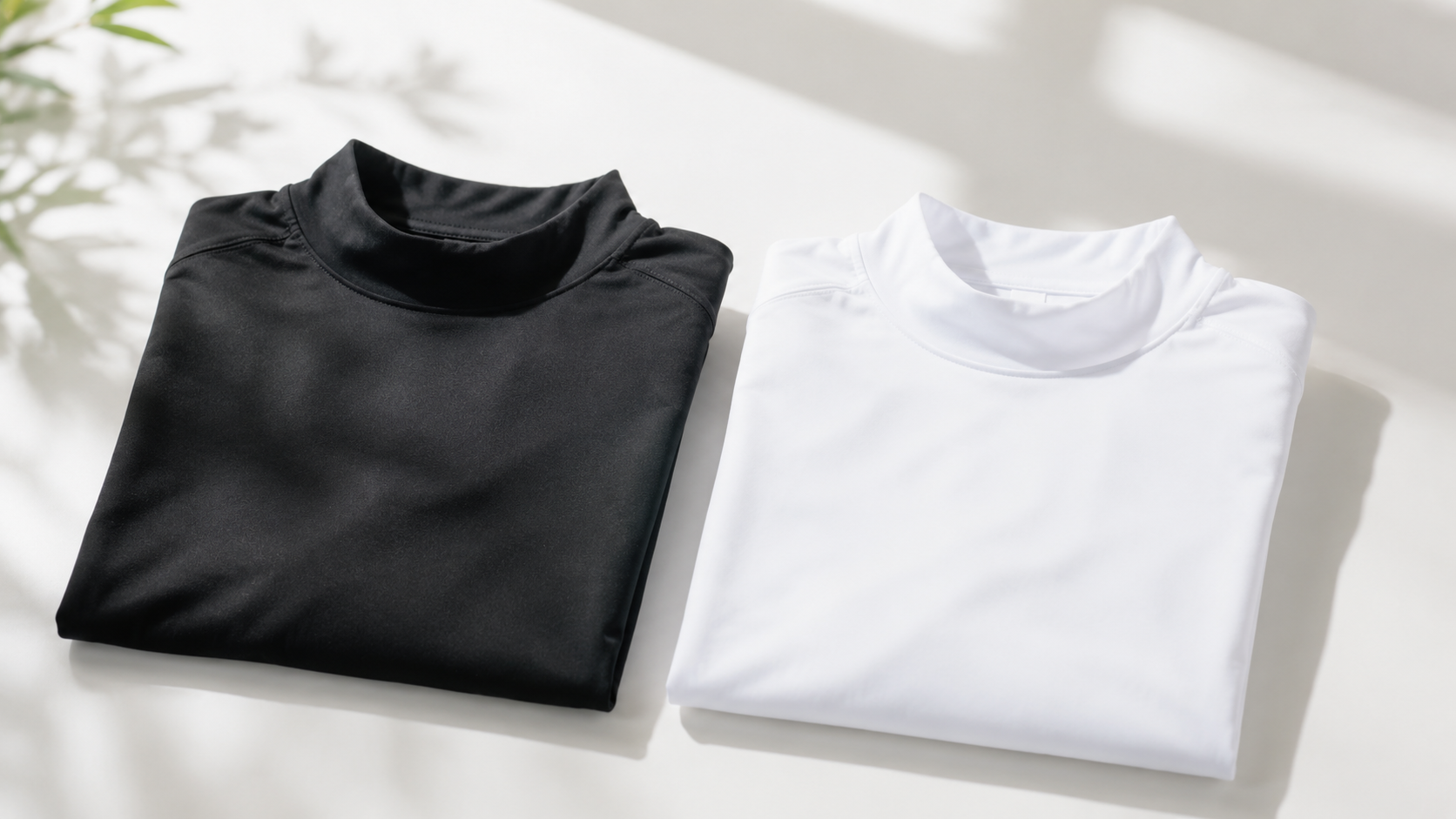
Our store's CORE SHIELD® is Japanese-made innerwear that blocks the near-infrared rays contained in sunlight. Using Trubeaute®, a special fiber with special ceramic microparticles derived from rare metals kneaded into it, it blocks 87%+ of near-infrared rays (White 88.6% / Black 87.6%; measured on the fabric alone by the material manufacturer).
It covers the torso, which has a large area exposed to sunlight, and blocks near-infrared and UV rays (97%+ blocked, UPF 50+) with its fabric. The difference from cooling-type innerwear is explained in detail in “How to choose heatstroke prevention innerwear.”
Summary
- Core body temperature is the temperature inside the body, such as the brain and internal organs, and determines the severity of heatstroke
- 40°C or higher is a life-threatening emergency. If consciousness is impaired, call an ambulance immediately
- Core body temperature is hard to bring down, so prevention that keeps it from rising is most important
- The three pillars of prevention: reduce incoming heat, increase outgoing heat, and avoid producing too much heat
Thinking in terms of core body temperature makes the priorities of your daily heat measures clear. Use it as a guide for how you act this summer.