Heatstroke prevention for field and farm work: Transforming summer labor with fan-equipped clothing and base layers
Construction sites, outdoor equipment work, and farm work. Outdoor labor in summer means being exposed to heat for far longer than sports or leisure. In recent years, workplace heatstroke prevention has been positioned as an important responsibility of employers, and the days of getting through on “guts and willpower” are over. This article organizes practical heat measures for both people who work on site and people who manage sites.
Why heatstroke risk is high in outdoor work
Long working hours, heat trapped by protective gear, and difficulty taking breaks create a level of risk far beyond leisure activities.
Work runs from morning to evening, 7–8 hours a day even in midsummer. Protective gear such as helmets, safety harnesses and long sleeves and trousers is essential for safety, but it also prevents the body from releasing heat. On top of that, under pressure from construction schedules or harvest timing, it is hard to rest at your own pace, and there is a structural tendency to put up with signs of illness.
About 42% of sunlight is near-infrared light, which we readily feel as heat. Once core body temperature (the temperature inside the body) rises, it does not come down easily (for details, see “What is core body temperature?”). Precisely on sites with long working hours, preventive measures that reduce the amount of sunlight you receive are important.
The standard is the WBGT (heat index)
As a rule, worksite heat measures should be built around the WBGT (heat index), not the air temperature.
The WBGT reflects humidity and solar radiation (radiant heat) in addition to temperature, and forecast and current values by location can be checked on the Ministry of the Environment's heatstroke prevention website. On humid days sweat does not evaporate and the body cannot release heat, so the danger rises even if the temperature is not very high. Get into the habit of planning work by “what is today's WBGT?” rather than “it's 33°C today, so it's fine.” The basic strategy is to avoid heavy work during the hours when the WBGT is high (generally 11:00–15:00) and move it to early morning or evening.
Clothing and gear: a layer that blocks sunlight and a layer that releases heat
Think of clothing for outdoor work as a combination of a layer that blocks sunlight and a layer that releases trapped heat.
- Layer 1 (next to the skin): heat-shielding innerwear — Cover the torso with innerwear whose fabric blocks the near-infrared rays in sunlight. Note that cool-touch-only innerwear does not block sunlight itself (the difference is explained in “How to choose heatstroke prevention innerwear”). Moisture-wicking, quick-drying properties that dry sweat quickly are also important for preventing post-sweat chills and discomfort
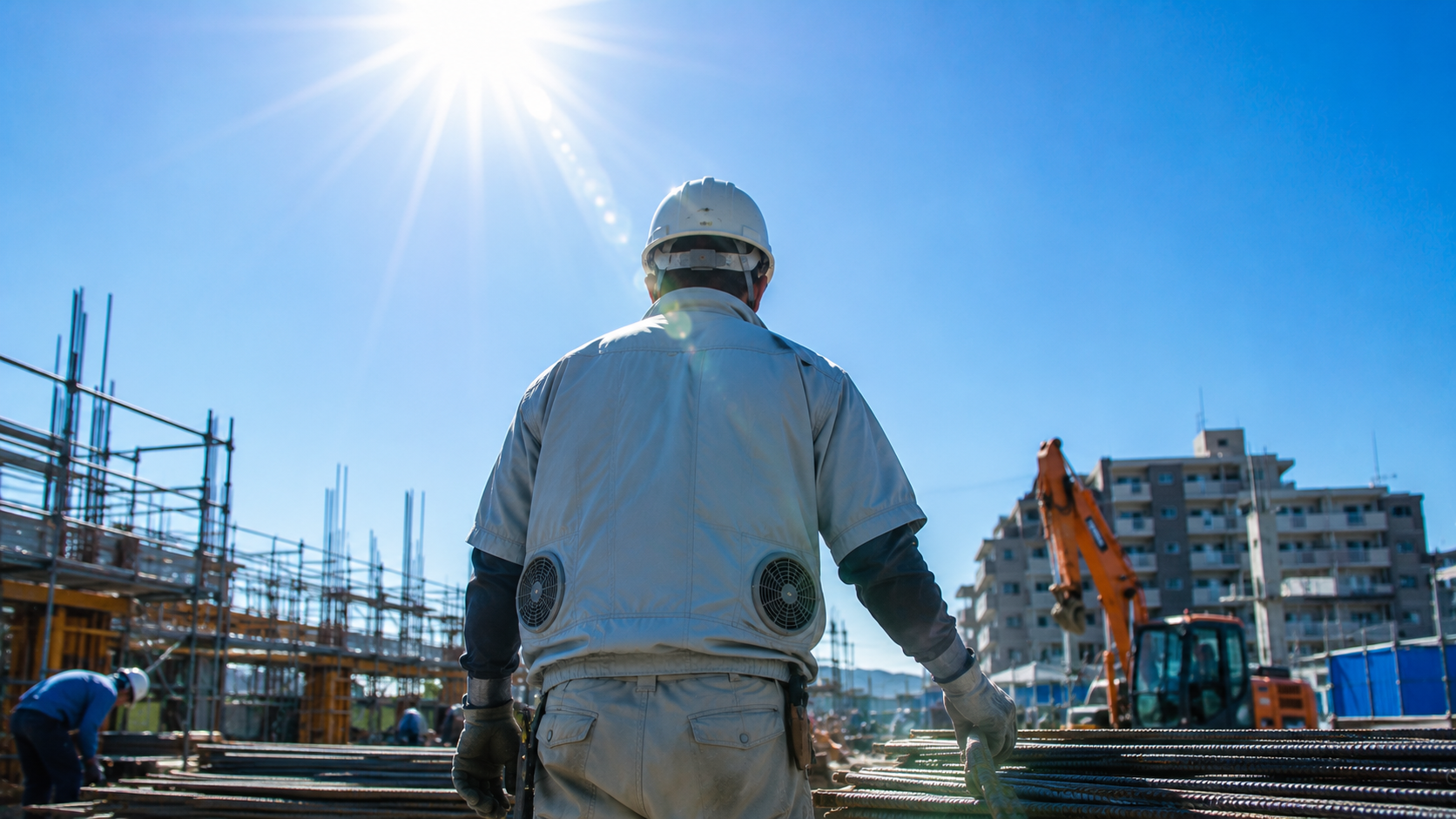
- Layer 2 (outside): fan-equipped or breathable clothing — Fan-equipped clothing is a typical “release” measure that cools the body by using airflow to promote sweat evaporation
- Head and neck: a heat-shielding inner cap under the helmet, a cooling towel around the neck, and so on
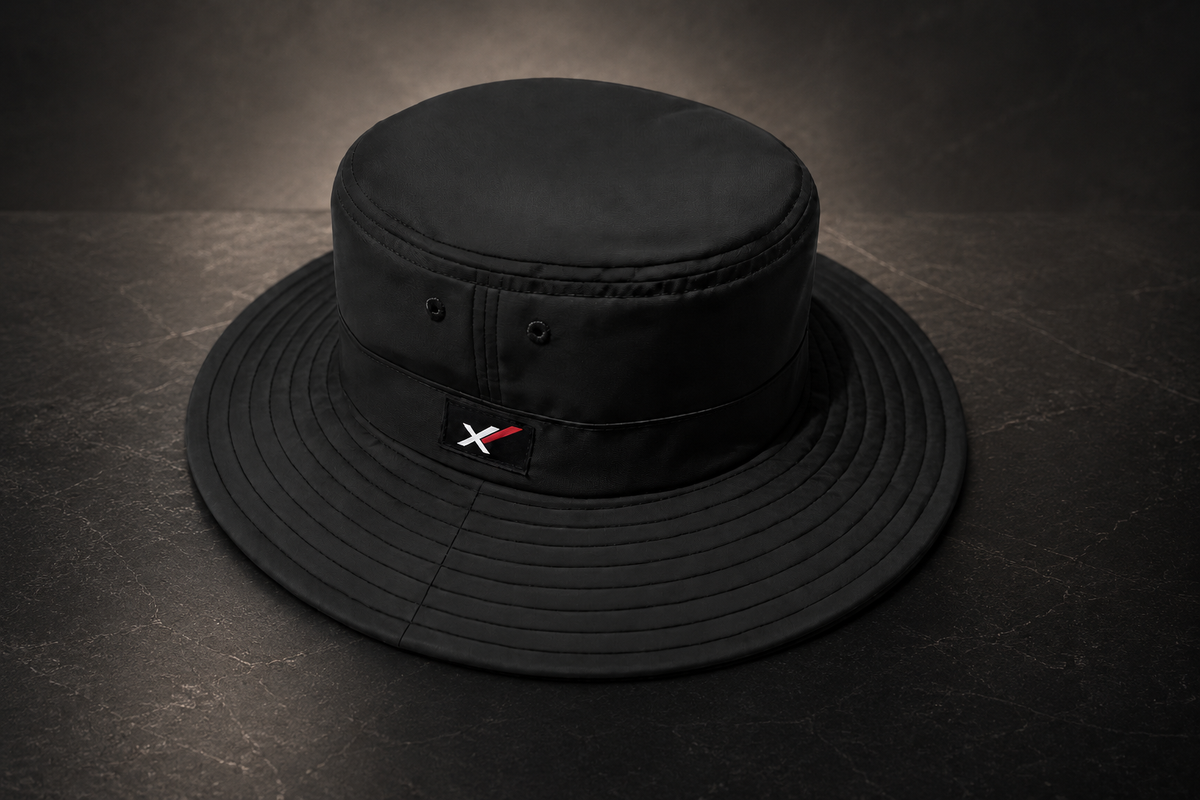
- For farm work: a wide-brim hat plus neck shade, and breathable, heat-shielding materials even for long sleeves. Greenhouse work can have no wind and high humidity, with a WBGT higher than outdoors, so be especially careful
The different roles of fan-equipped clothing and heat-shielding innerwear
If fan-equipped clothing is gear that dries sweat with airflow, heat-shielding innerwear is gear that blocks sunlight with fabric. Because their roles differ, they can be used together.
Fan-equipped clothing evaporates sweat using outside air drawn in by the fan, so its weakness is that cooling efficiency drops on extremely hot days when the outside temperature is close to body temperature. Combining it with innerwear that blocks near-infrared rays lets you cover the torso, which receives sunlight, with fabric.
Setting worksite rules (for managers)
Heatstroke prevention should be built into worksite rules, not left to individual care.
- Check and share the WBGT every day: At the morning meeting, share the day's heat index and work plan (times for heavy work, how often to take breaks)
- Scheduled breaks: Change “rest when it gets hard” to “always rest every ◯ minutes.” Provide a rest area with shade, air conditioning or fans, and cold drinks
- Systematic hydration and salt intake: Keep drinks and salt tablets on site at all times, rather than leaving it to individuals
- Mutual monitoring (buddy system): Dizziness, unsteadiness, odd responses and sweat suddenly stopping are danger signs. If you notice something wrong, stop the person's work without waiting for them to report it
- Consider heat acclimatization: Right after the rainy season, after time off, and for new workers on site, the body is not used to the heat. Deliberately reduce the workload for the first few days
- Share emergency procedures: If impaired consciousness is suspected, call an ambulance immediately and keep cooling the whole body until it arrives. Make sure everyone knows where to take the person and how to contact them
*For details on preventing heatstroke during work, the Ministry of Health, Labour and Welfare's workplace heatstroke prevention information is also useful.
The content of the obligation that took effect in 2025 is explained in “Revisiting mandatory workplace heatstroke measures in year two.”
CORE SHIELD®, Japanese-made innerwear for demanding sites
Our store's CORE SHIELD® is Japanese-made innerwear that blocks near-infrared and UV rays as the “first layer” that receives sunlight. Using Trubeaute®, a special fiber with special ceramic microparticles derived from rare metals kneaded into it, it blocks 87%+ of near-infrared rays (White 88.6% / Black 87.6%; measured on the fabric alone by the material manufacturer).
The functional components are kneaded into the fibers, so they do not wash off with sweat. The moisture-wicking, quick-drying fabric keeps the innerwear from getting heavy even on sites where you sweat a lot. It can be worn under fan-equipped clothing or as long-sleeved innerwear for farm work. For bulk purchases by companies and organizations, please contact us via Corporate inquiries.
Summary
- Outdoor work carries the highest heatstroke risk due to long hours, heat trapped by gear, and difficulty taking breaks
- The standard is the WBGT (heat index), not the air temperature. Avoid heavy work during high-WBGT hours
- One option for clothing: “heat-shielding innerwear to block sunlight” + “fan-equipped clothing to dry sweat”
- Don't leave measures to individuals; make breaks, hydration and mutual monitoring worksite rules
- Be especially careful before heat acclimatization (right after the rainy season, after time off)
Workers' bodies are a site's most important asset. Get through the summer safely by addressing both systems and equipment.