Heatstroke Prevention for Golf: A Summary of Summer Attire, Essentials, and On-Course Precautions
Golf in summer is actually a sport with an extremely high risk of heatstroke. A round takes 4–5 hours, involving constant exposure to direct sunlight on a course with no shade, and about 10km of walking. Furthermore, when you are focused on your game, you tend to be late in noticing physical abnormalities. To ensure that what should be an enjoyable round doesn't end in an emergency transport, this article summarizes heatstroke prevention measures for summer golf in three stages: "before the day," "clothing and gear," and "during the round."
Why is golf prone to heatstroke?
The combination of "long duration," "direct sunlight," and "hard to notice" creates the unique risks of golf.
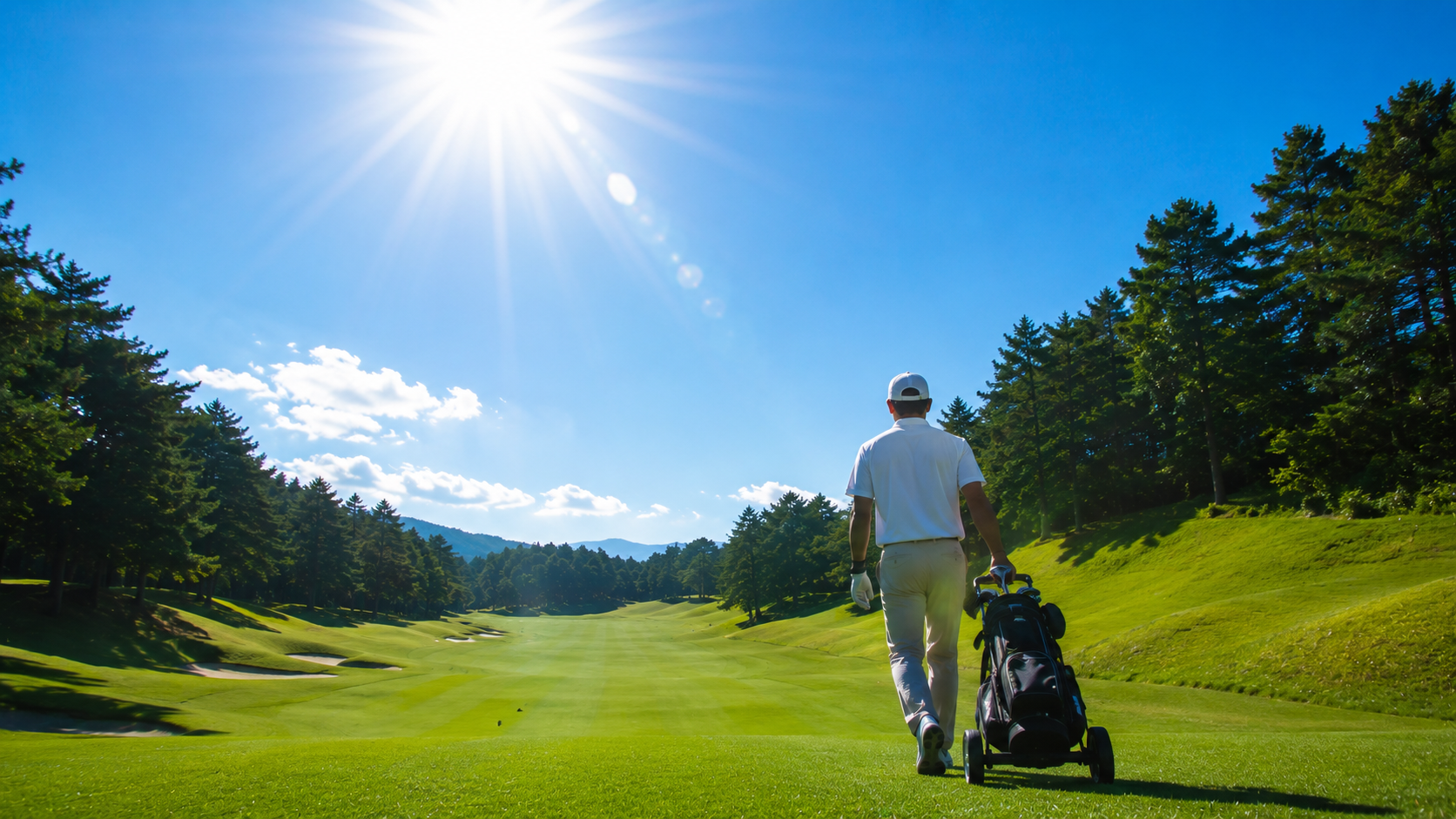
First is the length of time. The long haul of two 2-hour-plus halves is a level of direct sun exposure rarely experienced in daily life. Second is the environment. There is almost no shade on the fairway, and near-infrared rays—which account for about 42% of sunlight—reach deep into the skin, gradually raising the body's internal temperature (core body temperature). Third is delayed self-awareness. Due to focus on scores and play, or hesitation to inconvenience playing partners, people tend to ignore the signs that they are "feeling a bit off." Because core body temperature does not easily drop once it has risen (for more details, see "What is core body temperature?"), proactive measures to "keep it from rising" are especially important in golf.
Preparation before the round
Heatstroke prevention starts the day before tee-off. The key points are "sleep," "alcohol consumption," and "physical condition."
- Get enough sleep: Lack of sleep is a leading factor in impairing the body's thermoregulation. Even with an early start, ensure at least 6 hours.
- Go easy on alcohol the night before: Alcohol has a diuretic effect, meaning you will start the next morning in a dehydrated state. Heavy drinking the night before is the biggest enemy of a summer round.
- Breakfast and hydration: Skipping breakfast means starting without any initial store of salt and water. Start hydrating diligently before you even depart.
- Have the courage to cancel if you feel unwell: Playing with a fever, diarrhea, or a hangover will significantly increase your risk of heatstroke.
Choosing clothing
The basics for summer golf attire are balancing "blocking the sun" with "releasing heat."
- Innerwear: In golf, where you are exposed to direct sunlight for 4–5 hours, cooling innerwear that only offers a touch-cool sensation cannot prevent heat from entering. It is effective to protect your core with heat-shielding innerwear that blocks near-infrared rays, the main cause of rising body temperature. If worn under a polo shirt, a sleeveless type that allows heat to dissipate is more comfortable (the differences between types are explained in "How to choose heatstroke prevention innerwear").
- Polo shirts: Choose materials with high breathability and quick-drying properties. White or light colors are advantageous as they do not absorb as much heat.
- Hats: Essential. A wide-brimmed hat can also protect your neck and ears.
- Others: Sunglasses (UV rays entering through the eyes contribute to fatigue), breathable gloves, and quick-drying socks.
Checklist of items
Here are the items to pack in your cart for a summer round.
- At least 1.5–2L of beverages (not just water or tea, but a combination of sports drinks or oral rehydration solutions to replenish salt and electrolytes)
- Salt tablets or pickled plums
- Cooling towels/ice packs (having ice in your cooler box is very useful)
- Sunscreen (reapply at the half-turn)
- Spare innerwear and towel (changing at the half-turn makes the second half easier)
- One bottle of oral rehydration solution in case of emergency
Points to note during the round
The trick is to make "drink before you get thirsty" and "drink every hole" into mechanical rules.
- Hydrate every hole: Thirst is a sign that dehydration has already begun. Make it a habit to take a sip every time you stand at a tee box.
- Don't forget the salt: On days when you sweat a lot, water alone is not enough. Take a salt tablet or similar once an hour.
- Utilize shade and the cart: During wait times, head to the cart or the shade of trees. Even short moments of avoiding direct sun add up.
- How to spend the half-turn: Replenish your fluids and salt thoroughly during lunch, and change your clothes if possible. Beer promotes dehydration due to its diuretic effect; if you do drink it, keep it to a small amount and drink an equal or greater amount of water with it.
- Self-checks and mutual checks: Dizziness, headaches, nausea, repeated yawning, and sudden cessation of sweating are dangerous signs. Keep an eye on not just yourself, but your playing partners too. If you feel any abnormality, prioritize your body over your score. Do not hesitate to stop play and head to the clubhouse. If someone appears delirious, contact course management immediately to request emergency medical assistance.
※ You can check the day's Wet Bulb Globe Temperature (WBGT) on the Ministry of the Environment's "Heatstroke Prevention Information Site." On days when the level is "Danger," consider changing to an early-morning through-play round or postponing the game.
"CORE SHIELD®": The heatstroke prevention innerwear chosen by golfers
Our store's CORE SHIELD® is a Japanese-made heatstroke prevention innerwear designed specifically for environments like summer golf, characterized by "long duration × direct sunlight." Through the use of Trubeaute®, a special fiber containing CWO® near-infrared absorbing particles developed by Sumitomo Metal Mining Co., Ltd., it blocks over 76% of near-infrared rays. Tests by a third-party organization have confirmed that it suppresses the rise in temperature inside clothing by up to 2°C during wear (※please see the product page for details on test conditions).
Featuring touch-cooling, sweat-wicking/quick-drying, UPF50+, and 360° stretch, it does not hinder your swing. We also offer a sleeveless type that is less likely to show under a polo shirt. It has been featured in media such as golf magazines (GOLF BROS, Golf Magazine GEW, etc.), and we have received many comments from users saying, "I don't tire out as much during the back nine."
Summary
- Golf is a high-risk environment for heatstroke due to the combination of "long duration, direct sunlight, and being hard to notice."
- Prevention starts the day before. Sleep, moderation in alcohol, and breakfast affect your tolerance on the day.
- The basics for clothing are near-infrared blocking innerwear + breathable wear + a hat.
- During the round, make "a sip every hole" a mechanical rule. Include salt as well.
- If you feel an abnormality, prioritize your body over your score. Do not hesitate to stop play.
If you prepare properly, summer golf is the best season to take advantage of the long days. Please enjoy it with thorough countermeasures.