Heatstroke prevention for field and farm work: Transforming summer labor with fan-equipped clothing and base layers
Construction sites, outdoor utility work, and agricultural tasks. Outdoor labor in summer involves prolonged exposure to heat that is incomparable to sports or leisure. In recent years, heatstroke prevention in the workplace has become a crucial responsibility for employers, and the era of "grit and guts" is over. This article outlines practical heat countermeasures for both those working on-site and those managing the sites.
Why Outdoor Labor Carries High Heatstroke Risk
"Long hours," "heat accumulation from gear," and "difficulty taking breaks" create risks on a different level than leisure.
Work lasts from morning until evening, spanning 7 to 8 hours a day even in the height of summer. Protective gear like helmets, safety harnesses, and long sleeves/pants is essential for safety but also traps heat and prevents the body from cooling down. Furthermore, due to the structural pressure of construction deadlines or harvest timing, it is often difficult for workers to "take breaks at their own pace," leading to a tendency to ignore physical symptoms.
The main component of heat received from the sun is near-infrared radiation, which accounts for about 42% of sunlight. It penetrates deep into the skin, raising internal (core) body temperature, which does not easily drop once it has spiked (see "What is Core Body Temperature?" for details). In long-shift work environments, preventative measures focused on "keeping heat from entering the body" are most effective.
The Standard: "WBGT (Heat Index)"
The fundamental rule is to base site heat countermeasures on the WBGT (Heat Index) rather than just the air temperature.
WBGT is an index that reflects humidity and solar radiation (radiant heat) in addition to air temperature; you can check forecasted and current values by location on the Ministry of the Environment's "Heatstroke Prevention Information Site." On humid days, sweat does not evaporate effectively, making cooling difficult and increasing danger even if the air temperature is not exceptionally high. Do not rely on "It's only 33°C today so it's fine"; instead, make it a habit to build your work schedule around the daily WBGT. The basic strategy is to avoid heavy labor during hours with high WBGT (generally 11:00 AM to 3:00 PM) and reschedule tasks for early morning or evening.
Clothing and Gear: A Two-Pronged Approach of "Blocking" and "Releasing"
Think of outdoor work clothing as a combination of a "layer that prevents heat entry" and a "layer that allows trapped heat to escape."
- Layer 1 (Against the skin): Heat-shielding innerwear — Covers the torso with innerwear that blocks near-infrared rays (the primary cause of rising body temperature), reducing heat entry at the source. Note that innerwear providing only "contact cooling" cannot prevent heat penetration during long hours under direct sunlight (differences are explained in "How to Choose Heatstroke Prevention Innerwear"). High sweat-wicking and quick-drying properties are also crucial to prevent chills from sweat and discomfort.
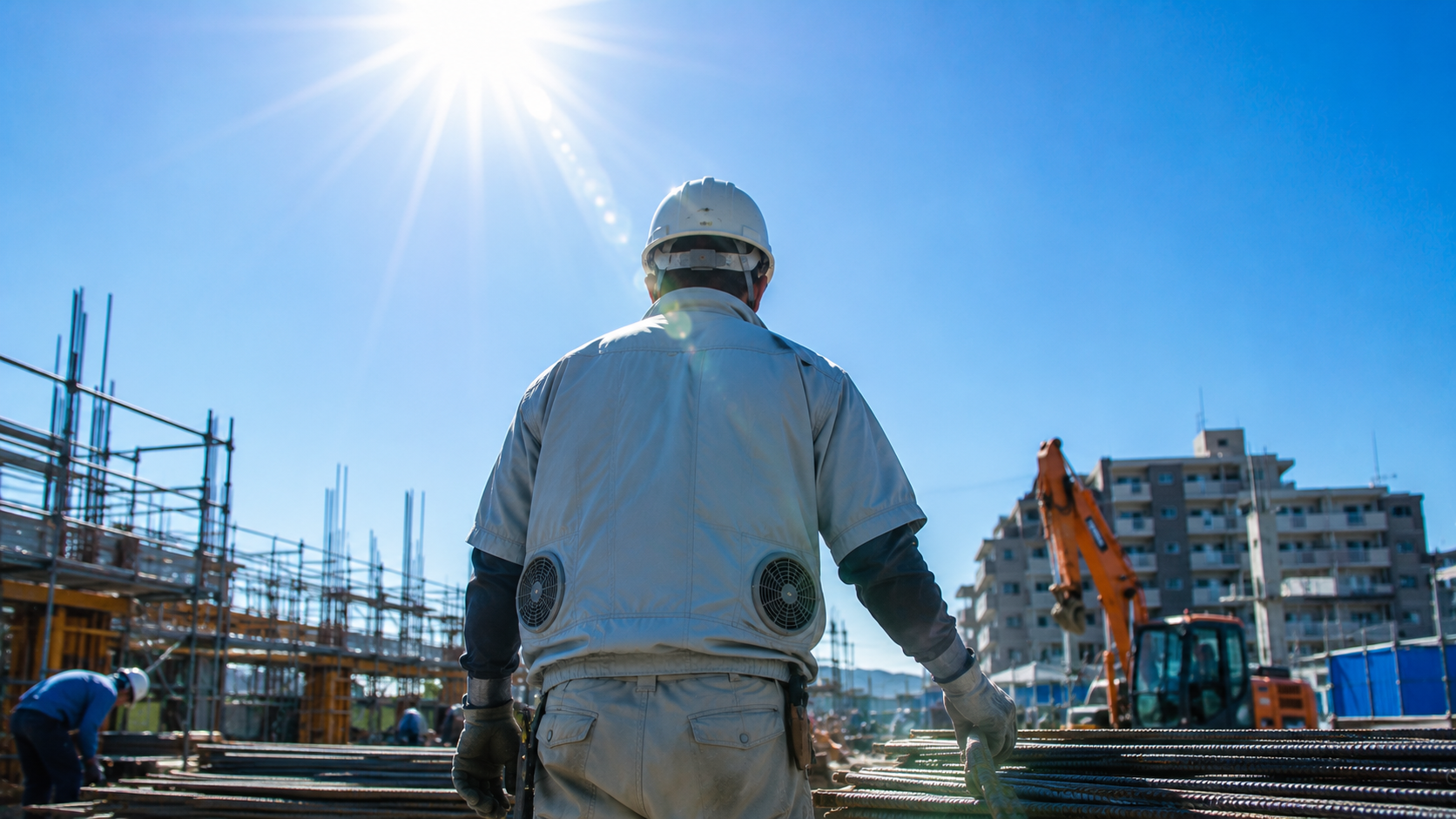
- Layer 2 (Outer layer): Air-conditioned clothing/Breathable wear — Fan-equipped clothing represents the "releasing" strategy, using airflow to promote sweat evaporation and cool the body.
- Head/Neck: Heat-shielding inner caps under helmets, cooling neck towels, etc.
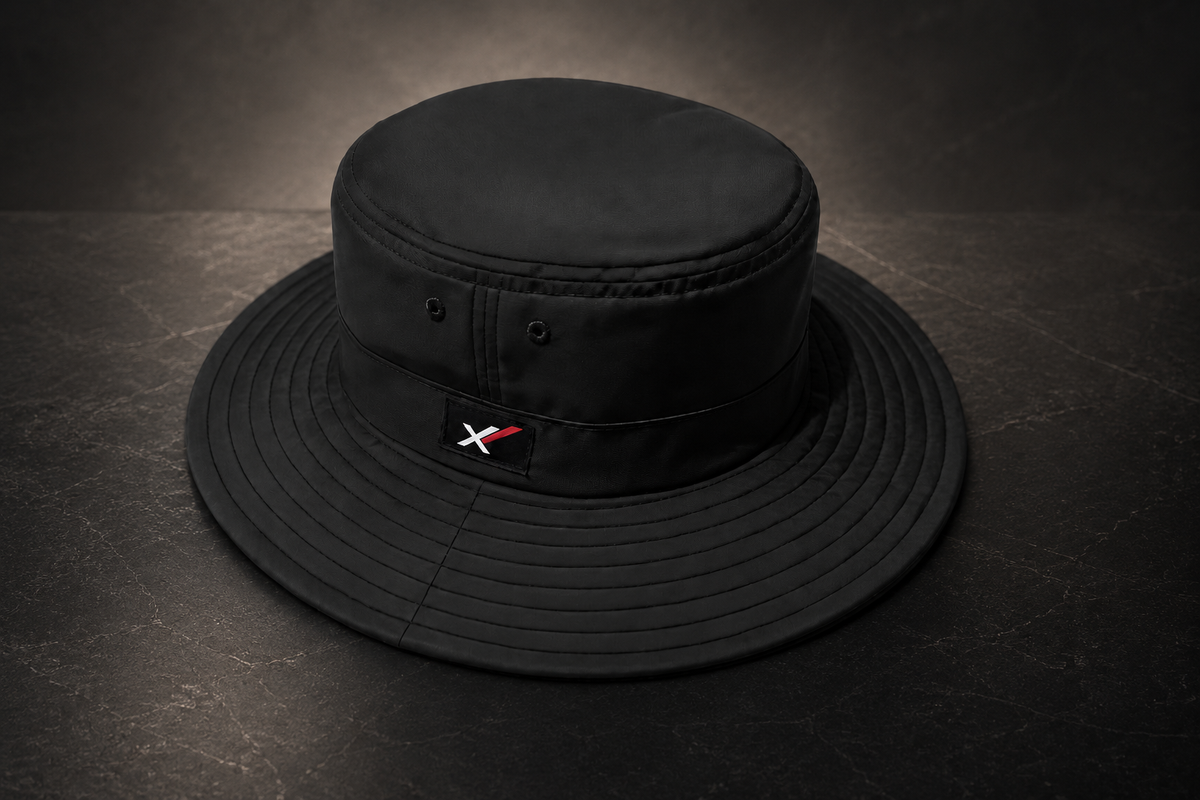
- Agricultural work: Wide-brimmed hats with neck shades, and choosing long sleeves made of breathable, heat-shielding materials. Working in greenhouses requires extra caution, as windless and high-humidity conditions can push the WBGT even higher than outdoors.
Why Combining Fan-Equipped Clothing and Heat-Shielding Innerwear is Logical
If fan-equipped clothing is "cooling" gear, heat-shielding innerwear is "heat-blocking" gear. Their roles differ, so using them together creates a synergistic effect.
Because fan-equipped clothing works by evaporating sweat using external air drawn in by fans, its cooling efficiency drops significantly on extreme summer days when the ambient temperature nears body temperature. Furthermore, near-infrared rays from direct sunlight penetrate the clothing and continue to heat the body. Combining this with heat-shielding innerwear reduces the amount of heat entering the core in the first place, making it easier for the fan-equipped clothing to "keep up" with cooling demands. It is also an effective combination because it prevents the air inside the clothing from becoming overly warm.
Establishing Site Rules (For Managers)
Heatstroke prevention should not be left to individual diligence but must be structured into formal site rules.
- Daily confirmation and sharing of WBGT: Share the day's heat index and work plan (heavy labor windows, break frequency) during morning meetings.
- Scheduled breaks: Instead of "rest when you feel tired," switch to "rest without fail every X minutes." Provide rest areas with shade, AC, or fans, and ensure cold drinks are available.
- Structured hydration and salt intake: Keep drinks and salt tablets on-site at all times; do not leave it to individuals to bring their own.
- Mutual monitoring (Buddy system): Dizziness, stumbling, slurred or unusual speech, or the sudden cessation of sweating are danger signs. If noticed, interrupt work immediately without waiting for the person to report feeling unwell.
- Heat acclimatization awareness: Bodies are not used to heat immediately after the rainy season, after breaks, or for new workers. Intentionally limit the workload for the first few days.
- Emergency procedure sharing: If a loss of consciousness is suspected, call for an ambulance immediately and continue cooling the whole body until help arrives. Ensure everyone knows the hospital transport and notification procedures.
※ For further details on heatstroke prevention measures during work, consult the Ministry of Health, Labour and Welfare's information on heatstroke prevention in the workplace.
Details on the mandates starting in 2025 are explained in "Mandatory Workplace Heatstroke Prevention: What to Review in the Second Summer."
CORE SHIELD®: Japanese-Made Innerwear for Harsh Environments
Our store's CORE SHIELD® is a Japanese-made innerwear designed to act as your Layer 1, "keeping heat from entering the body." Using Trubeaute®—a special fiber embedded with CWO® near-infrared absorbing fine particles developed by Sumitomo Metal Mining Co., Ltd.—it has been verified by third-party testing organizations to block over 76% of near-infrared rays and suppress the rise of internal clothing temperature by up to 2°C (※ See the product page for full test conditions).
Because the functional ingredients are embedded in the fiber, the effectiveness is semi-permanent and does not wash out. With quick-drying properties roughly twice that of standard polyester, it is designed not to become heavy, even on sites where you sweat profusely. Protect your body whether worn under air-conditioned gear or as a long-sleeve base for agricultural work. For bulk purchases for corporations and organizations, please inquire via our Corporate Inquiries page.
Summary
- Outdoor labor carries maximum heatstroke risk due to "long hours, heat accumulation from gear, and difficulty resting."
- Base decisions on WBGT (Heat Index), not air temperature. Avoid heavy labor during peak hours.
- Clothing strategy: A logical two-pronged approach using "heat-shielding innerwear" + "fan-equipped clothing."
- Don't rely on individual willpower—make breaks, hydration, and mutual monitoring site rules.
- Be extra cautious during periods before heat acclimatization (e.g., just after the rainy season or after long breaks).
The bodies of those who work are a site's most important capital. Stay safe through the summer with both structural systems and the right equipment.