
What is core body temperature? An easy-to-understand guide to its relationship with heatstroke and how to "prevent it from rising and lower it."
Have you ever heard the term "core body temperature" in heatstroke-related news? In reality, it is not the skin temperature measured by a thermometer that determines the severity of heatstroke, but this core body temperature. And core body temperature has a troublesome characteristic: "once it rises, it does not drop easily." This article provides fundamental knowledge about core body temperature and practical measures to prevent heatstroke.
What is core body temperature?
Core body temperature is the temperature of the body's interior (the core), such as the brain and internal organs. It is distinct from the skin surface temperature, which is easily affected by outside air, and is typically maintained at around 37°C.
When the body's thermoregulation mechanism is working normally, the core body temperature remains almost constant. However, if heat continues to accumulate in the body due to direct midsummer sunlight or intense exercise, the dissipation of heat through sweat and the skin cannot keep up, and the core body temperature begins to rise. This is the onset of heatstroke.
Core body temperature and heatstroke severity
The severity of heatstroke is deeply related to how high the core body temperature has risen. The benchmarks are as follows:
- Mild (Core temperature 37.5°C to under 38°C): Feeling sluggish, dizziness, headache, nausea, etc.
- Moderate (38°C to under 40°C): Vomiting, severe headache, weakness, lightheadedness, etc.
- Severe (40°C or higher): Impaired consciousness, convulsions, breathing difficulties, etc. Also known as "heatstroke," this is a life-threatening condition requiring immediate cooling and emergency assistance.
Once the temperature exceeds 40°C, internal organs begin to sustain damage. If you notice signs such as confusion, abnormal reactions to being spoken to, or an inability to drink water on one's own, do not hesitate to call an ambulance.
※ For details on symptoms and first aid, please also refer to the Ministry of the Environment's "Heatstroke Prevention Information Site."
The troublesome nature of core body temperature: "It doesn't drop suddenly"
While you can quickly cool the skin surface with ice or cooling products, heat trapped deep inside the body does not dissipate easily.
Placing a cold towel on your neck may feel refreshing, but what is mainly being cooled is the skin temperature. To lower core body temperature, cooled blood must circulate through the body to carry away internal heat, which takes time. The reason "immediate cooling" is required for severe heatstroke is because this time lag can be fatal.
The conclusion drawn from this characteristic is simple: It is far easier to "prevent it from rising" than to "lower it." The essence of heatstroke prevention lies in proactive measures to prevent the core body temperature from rising, more so than in knowledge of first aid.
Prevention methods to keep core body temperature from "rising"
The approach to prevention is threefold: "reduce heat entering the body," "increase heat leaving the body," and "don't generate too much heat."
1. Reduce heat entering the body: The primary cause of rising body temperature under direct sunlight is near-infrared radiation, which accounts for approximately 42% of sunlight. Because it penetrates deep into the skin and converts into heat, in addition to using hats and shade, it is effective to cover the torso with apparel that has near-infrared shielding functions. Please note that standard UV-cut products cannot block near-infrared radiation (For details, see "What is Near-Infrared? Differences from UV and Impact on Heatstroke and Skin").
2. Increase heat leaving the body: Sweat evaporation is the body's primary cooling device. It is fundamental to keep materials for sweat available through frequent hydration and salt intake, and to not hinder evaporation by wearing breathable, quick-drying clothing. On high-humidity days, sweat evaporates less easily and cooling efficiency drops, so caution is required even if the air temperature is not particularly high.
3. Don't generate too much heat: The more the body is active, the more heat it generates internally. Adjusting activities is also part of core body temperature management, such as reducing the intensity of exercise or work on days with a high Wet Bulb Globe Temperature (WBGT), taking frequent breaks, and being especially careful right after the rainy season when the body is not yet used to the heat.
To lower core body temperature in an emergency
If you suspect someone has heatstroke, immediately "move them to a cool place," "loosen their clothing," "cool major blood vessels," and "provide water and salt."
Even on the surface of the body, major blood vessels run through the neck, underarms, and groin; cooling these areas helps cooled blood circulate and lowers the core body temperature. If the person is not fully conscious or cannot drink water on their own, continue cooling while immediately calling for emergency services.
CORE SHIELD®: Suppressing core body temperature rise by up to 2°C
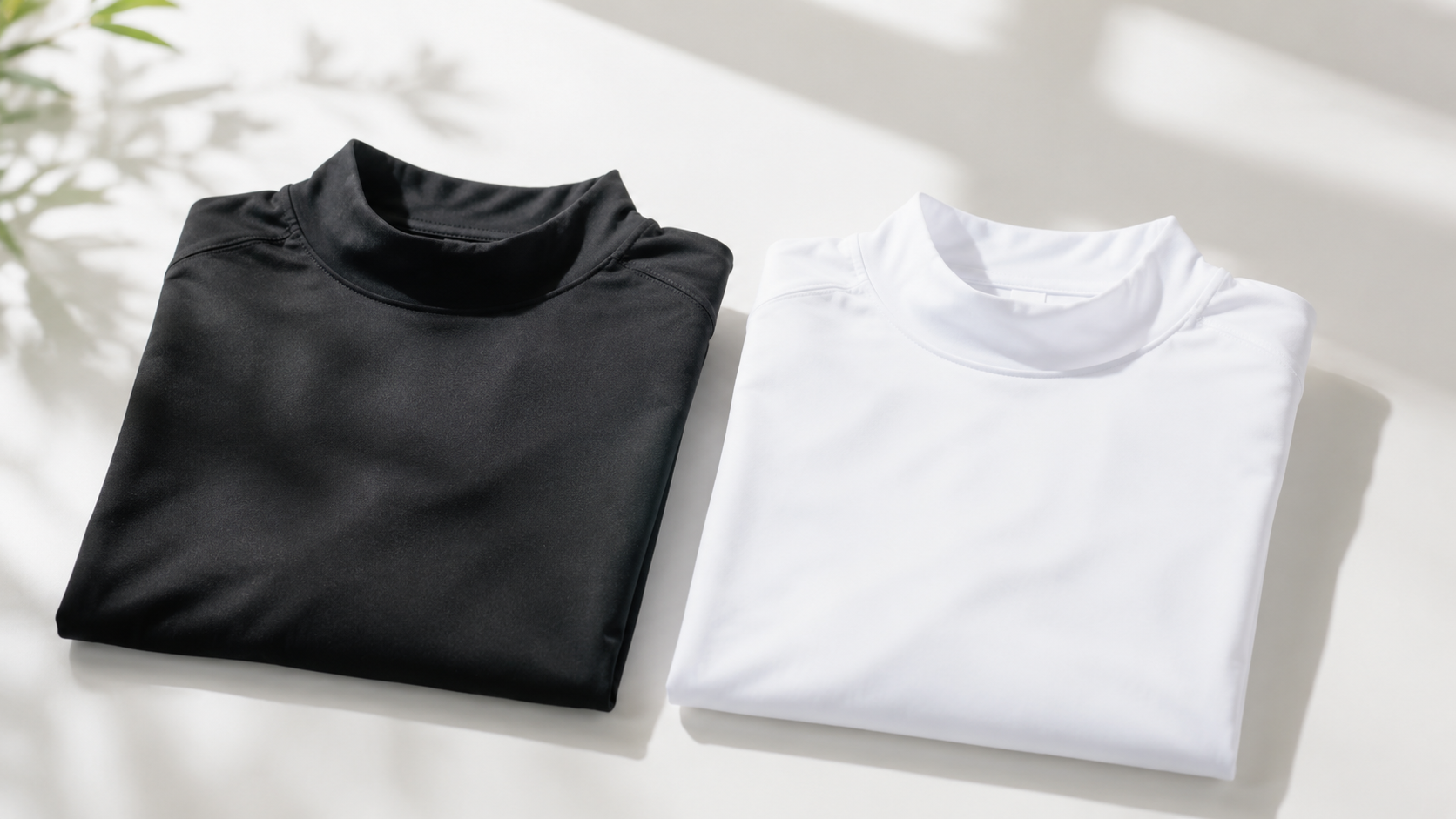
Our store's CORE SHIELD® is a Japanese-made heatstroke prevention innerwear that takes an approach of "reducing heat entering the body." Using Trubeaute®, a special fiber infused with the near-infrared absorbing micro-particle CWO® developed by Sumitomo Metal Mining Co., Ltd., it blocks over 76% of near-infrared rays and has been confirmed in tests by third-party institutions to suppress the rise in temperature inside clothing by up to 2°C during wear (*Please see the product page for details on test conditions).
It is a key piece for "prevention" that blocks heat accumulation in the torso—the main cause of rising core body temperature—just by wearing it. The difference between this and cooling-type products is explained in detail in "How to choose heatstroke prevention innerwear."
Summary
- Core body temperature is the temperature of the internal body; it dictates heatstroke severity.
- 40°C or higher is a life-threatening emergency. Call for help immediately if consciousness is impaired.
- Since it is difficult to "lower" core body temperature, "preventing" it from rising is most important.
- The three pillars of prevention are "reduce incoming heat," "increase outgoing heat," and "don't generate too much heat."
Having the perspective of "core body temperature" makes the priorities of your daily heat-beating strategies clear. Please use this as a standard for your choices this summer.